
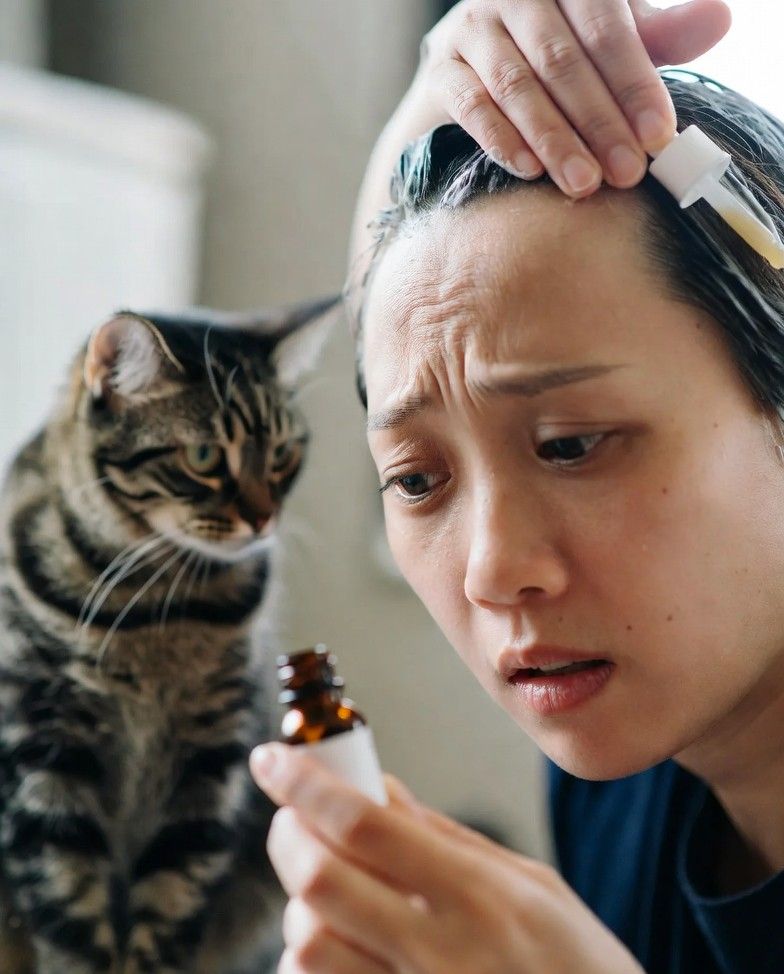
Veterinary toxicology data shows that even small amounts of certain human medications can be dangerous to pets, and minoxidil is among the most concerning. Widely used for hair loss in humans, this ingredient can cause serious, even life-threatening reactions in animals, especially cats.
One commonly used product, Minoxidil Kirkland 5%, is effective for human scalp treatment but poses hidden risks in homes with pets. While it may seem harmless when applied as directed, accidental exposure can happen quickly and quietly, often before an owner realizes the danger.
Why It’s Dangerous
Minoxidil works by widening blood vessels and improving blood flow to hair follicles in humans. However, animals process substances differently. Cats, in particular, lack certain liver enzymes needed to safely metabolize compounds like minoxidil. This makes even tiny doses potentially toxic.
Research published by the ASPCA Animal Poison Control Center highlights that minoxidil exposure in pets can lead to cardiovascular stress. Dogs may experience mild to moderate symptoms, but cats are far more sensitive, with a higher risk of severe complications.
Symptoms of toxicity can develop within hours. These include:
- Lethargy or unusual weakness
- Rapid or irregular heartbeat
- Difficulty breathing
- Fluid buildup in the lungs
- Collapse in severe cases
Veterinary experts note that early signs are often subtle. A cat that seems slightly tired or withdrawn may already be experiencing internal stress. This delayed recognition can make outcomes worse if treatment is not sought quickly.
Common Exposure Scenarios
Despite careful use, exposure often happens through everyday interactions. Pets are naturally curious and tend to explore their environment through licking and grooming.
One of the most common scenarios involves pets licking a treated area on their owner’s skin. Even if the product has dried, residue can still transfer. Cats grooming their owners’ hair or resting near their heads are especially at risk.
Another frequent source of exposure is contaminated surfaces. Pillows, bed sheets, and couch cushions can carry traces of topical hair treatment solutions. Data from the Pet Poison Helpline indicates that indirect contact is a leading cause of poisoning cases involving topical medications.
Hands are another overlooked factor. After applying a hair regrowth product, touching a pet without washing hands can transfer residue. Over time, repeated small exposures can accumulate and lead to symptoms.
What Pet Owners Should Do
Prevention remains the most effective way to protect pets. Small changes in routine can significantly reduce risk.
- Store hair treatment products in secure cabinets, out of reach of pets
- Apply solutions in areas where pets are not allowed
- Wash hands thoroughly after each application
- Avoid letting pets come into contact with treated skin or hair
- Change pillowcases regularly if applying treatment before sleep
These steps may seem simple, yet they address the most common pathways of exposure. Veterinarians often stress that awareness is the first line of defense. Learning which everyday substances are safe or harmful for pets can further help owners make informed decisions and reduce risks inside the home.
Emergency Response
If you suspect that a pet has been exposed to minoxidil, immediate action is critical. Do not wait for symptoms to appear. Early intervention can make a significant difference in recovery.
First, remove any remaining substance. If the exposure is topical, gently wash the affected area of the pet with mild soap and lukewarm water. Avoid using harsh chemicals or scrubbing aggressively.
Next, contact a veterinarian or a pet poison hotline right away. The American Veterinary Medical Association advises that rapid consultation can guide proper treatment and improve outcomes. Be ready to provide details about the product, the amount involved, and the time of exposure.
Do not attempt home remedies unless directed by a professional. Some actions, such as inducing vomiting, can cause more harm depending on the situation.
Conclusion
Hair regrowth solutions designed for humans, including popular topical treatments, can carry serious risks for pets when safety precautions are overlooked. The same ingredient that promotes hair growth can disrupt vital systems in animals, particularly in sensitive species like cats.
Understanding how these products behave in a shared environment is essential. By adopting careful habits, such as proper storage, thorough hygiene, and limiting contact after application, pet owners can reduce the chances of accidental exposure.
Awareness does not require alarm, but it does call for attention. With the growing use of hair loss treatments like topical minoxidil solutions, informed pet care becomes part of responsible ownership. Keeping pets safe often comes down to small, consistent actions that prevent avoidable harm.
